How to Improve Consistency Across Multiple Locations
To improve consistency across multiple locations, define a small set of clear standards, turn them into short routines that run every shift, verify the critical points with evidence, and follow up on deviations with each location every week. Consistency comes from a closed loop of standard, routine, verification and coaching, not from more documents or more audits.
Consistency is a system, not a personality
Every multi-location operator knows the pattern. One location is excellent, one is fine and one keeps causing problems, even though they share the same concept, the same manual and the same suppliers. The easy explanation is the manager. The more useful explanation is the system around the manager.
Consistency is what happens when the same standard is understood, executed and checked the same way in every location, every shift. That does not happen by sending a longer manual or doing more audits. It happens when four things are connected: a clear standard, a routine that puts it into practice, verification that shows whether it was done, and follow-up that helps the location improve.
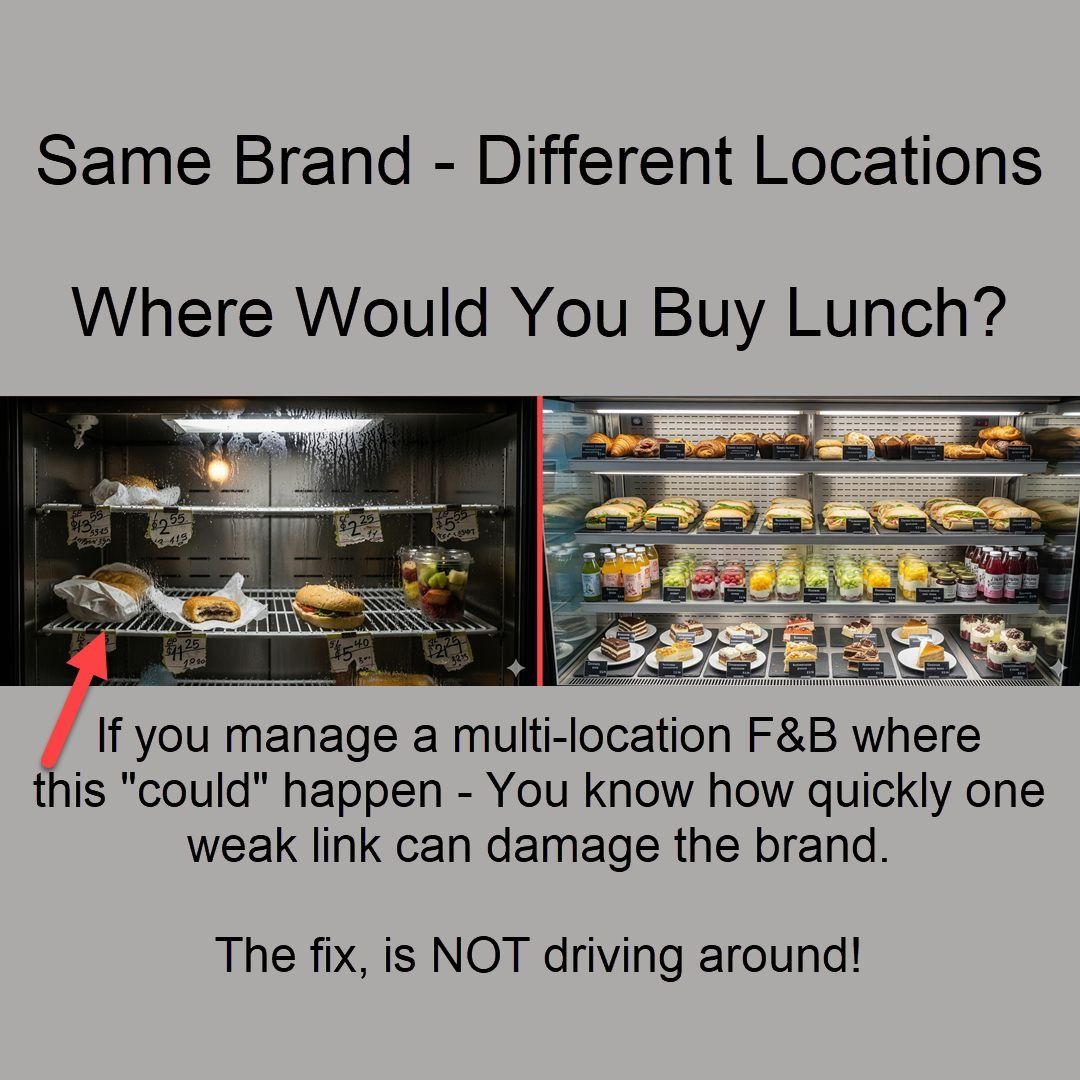
Why quality varies between locations
When we look at chains with uneven quality, the causes tend to fall into four groups:
- Unclear standards. The standard exists, but it is long, outdated, in several versions or open to interpretation. "Keep the display attractive" means different things to different people.
- Training depends on who trains. New staff learn from whoever is on shift, including their shortcuts. Over time each location develops its own version of the concept.
- Routines are not verified. Checklists are ticked, but nobody can tell whether the work was done properly.
- Follow-up is late. Problems surface at the quarterly audit, in a complaint or a review, long after they became habits.
Fixing only one of these rarely works. Better training without verification fades. More audits without clear standards create frustration. The levers work together. For a deeper diagnosis, read why does quality vary between locations.
A four-level consistency maturity model
Use this model to place your network honestly. Most chains are somewhere between level 1 and 2.
| Level | What it looks like | Typical symptoms | Next step |
|---|---|---|---|
| 1. Documented | Standards exist in manuals, PDFs and emails | Different versions, staff cannot find answers, quality depends on the manager | Make standards short, current and searchable on a phone |
| 2. Routinised | Key standards are daily checklists | Checklists are ticked, but results still vary | Add evidence on critical points: values, photos, OK / Not OK |
| 3. Verified | Critical points are evidenced and deviations recorded | HQ sees problems but follow-up is manual and slow | Route deviations to owners and review patterns weekly |
| 4. Self-correcting | Deviations trigger follow-up, trends drive coaching and updates to standards | Problems are found and fixed between audits | Keep improving standards based on data from the floor |
Level 4 is not about more control. It is about locations seeing and fixing their own issues before HQ has to step in.
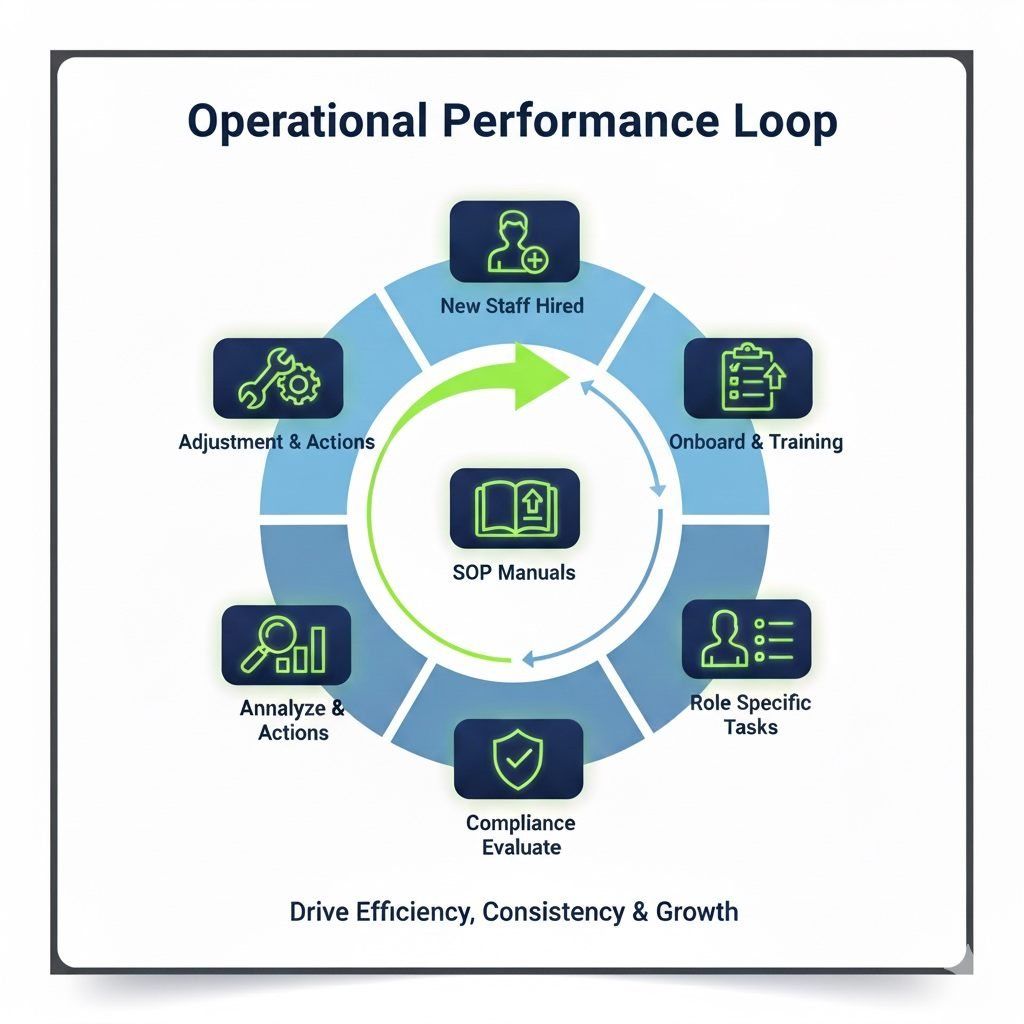
The consistency loop: five steps
1. Choose the moments that matter
Do not start with the whole manual. List the three to five moments that matter most for guests and safety: for a restaurant maybe opening readiness, food safety, the hero product and restrooms; for retail maybe store opening, visual standards, campaign set-up and stock. Those are your first standards.
2. Write standards people can follow
Each standard should fit on a phone screen: what good looks like, the steps, a photo of the correct result and the most common mistake. If a new employee cannot follow it on their second day, rewrite it. Our tip on writing SOP instructions shows how.
3. Turn standards into routines
A standard that is not part of a routine will be forgotten. Put each one into the shift rhythm: opening, pre-peak, closing, weekly. Assign an owner and a deadline.
4. Verify what matters
Not every point needs a photo. Critical points do. Use values for temperatures and counts, photos for visual standards and OK / Not OK for everything that can fail. See how to know if daily routines are actually completed.
5. Follow up weekly, as a coach
Review results with each location every week: what went well, which deviations repeat and what support is needed. Update the standard when the same problem shows up in many places. That is often a sign the standard, not the people, is the problem.
Where is your network on the maturity model? Book a short intro and we will help you place your chain and pick the first three routines to fix.
A worked example: a 25-location café chain
The following is an illustrative example, not a specific customer. A café chain with 25 locations sees large differences in review scores and in its own store visits. The ops team takes these steps over 90 days:
- Weeks 1 to 2. They pick four moments: opening readiness, the display fridge, coffee quality and restrooms. Each gets a one-screen standard with a photo of the correct result.
- Weeks 3 to 4. They pilot the routines in five locations, including two of the weakest. The opening checklist shrinks from 40 points to 14 after feedback from shift leads.
- Weeks 5 to 8. The display fridge gets a photo at opening and after lunch. Fridge temperatures become values. Not OK answers notify the store manager and create a task.
- Weeks 9 to 12. All 25 locations are live. Area managers start each week with a list of repeated deviations instead of a calendar of visits, and spend their visits coaching where the data shows a need.
What they measure: on-time completion, share of evidenced points, repeated deviations per location and review scores. What they look for is not a perfect average, but a smaller spread between the best and the weakest locations.
Common mistakes
- Trying to fix everything at once. Start narrow, prove it works, then expand.
- Measuring averages only. The average can look fine while three locations are failing. Look at the spread.
- Treating deviations as failures. A reported Not OK is good news: it means the system works. Punishing reports teaches people to stop reporting.
- Leaving franchisees out. Involve owners and store managers in choosing and testing routines. Consistency that is co-owned lasts.
- Never updating the standard. If ten locations fail the same point, change the standard or the equipment, not just the people.
Metrics for multi-location consistency
| Metric | Definition | What it tells you |
|---|---|---|
| Critical routine on-time rate | Completed before deadline ÷ scheduled, per location | Whether the day starts under control |
| Evidenced share | Critical points with value, photo or OK / Not OK ÷ total | Whether checks are real |
| Repeated deviations | Same Not OK three or more times in four weeks | Where coaching or investment is needed |
| Deviation closure time | Median time from Not OK to closed | Whether follow-up works |
| Spread between locations | Gap between top and bottom quartile on any metric | Your real consistency |
| Guest signal | Review score, mystery guest or complaints per location | Whether it shows up for guests |
How Chainformation helps
Chainformation connects the loop in one workspace. Standards live in digital manuals that are searchable on a phone. Routines run as scheduled checklists with values, photos and OK / Not OK answers. Deviations notify the right role and are tracked to closure, and HQ and area managers see completion and deviations per location. Templates are shared, so improvements roll out to every location at once.
Related reading: how to reduce operational drift, QSR daily operations and multi-location compliance. You can also see how others did it in our customer stories.
Make your weakest location look like your best. Book a 15-minute intro and we will show how chains close the gap with routines, evidence and weekly follow-up.
FAQ
Why does quality vary between locations of the same chain?
Usually because of four things: standards that are unclear or hard to find, training that depends on the local manager, routines that are not verified, and follow-up that only happens at audits. The people are rarely the root cause; the system around them is.
What is the fastest way to improve consistency?
Pick the three to five moments that matter most to guests and safety, write a clear standard for each, turn them into short daily routines with evidence, and review the results weekly with each location. Expanding later is easier than fixing everything at once.
How many standards should a chain have?
As few as needed to protect the brand and safety, written so a new employee can follow them. A short, current and used set of standards beats a long manual that nobody opens.
How do you measure consistency across locations?
Track on-time completion of critical routines, the share verified with evidence, repeated deviations per location, deviation closure time and a guest-facing measure such as review score or mystery guest results. Compare the spread between locations, not just the average.
Do audits improve consistency?
Audits show where you are, but they are too infrequent to change daily behaviour on their own. Combine them with daily and weekly routines, so problems are found and fixed between audits.
How do franchise networks improve consistency without micromanaging?
By making standards easy to follow, giving franchisees and managers their own results, and coaching on patterns instead of policing single mistakes. Transparency that helps the location run better is accepted; control for its own sake is not.
Canonical: /resources/guides/how-to-improve-consistency-across-multiple-locations